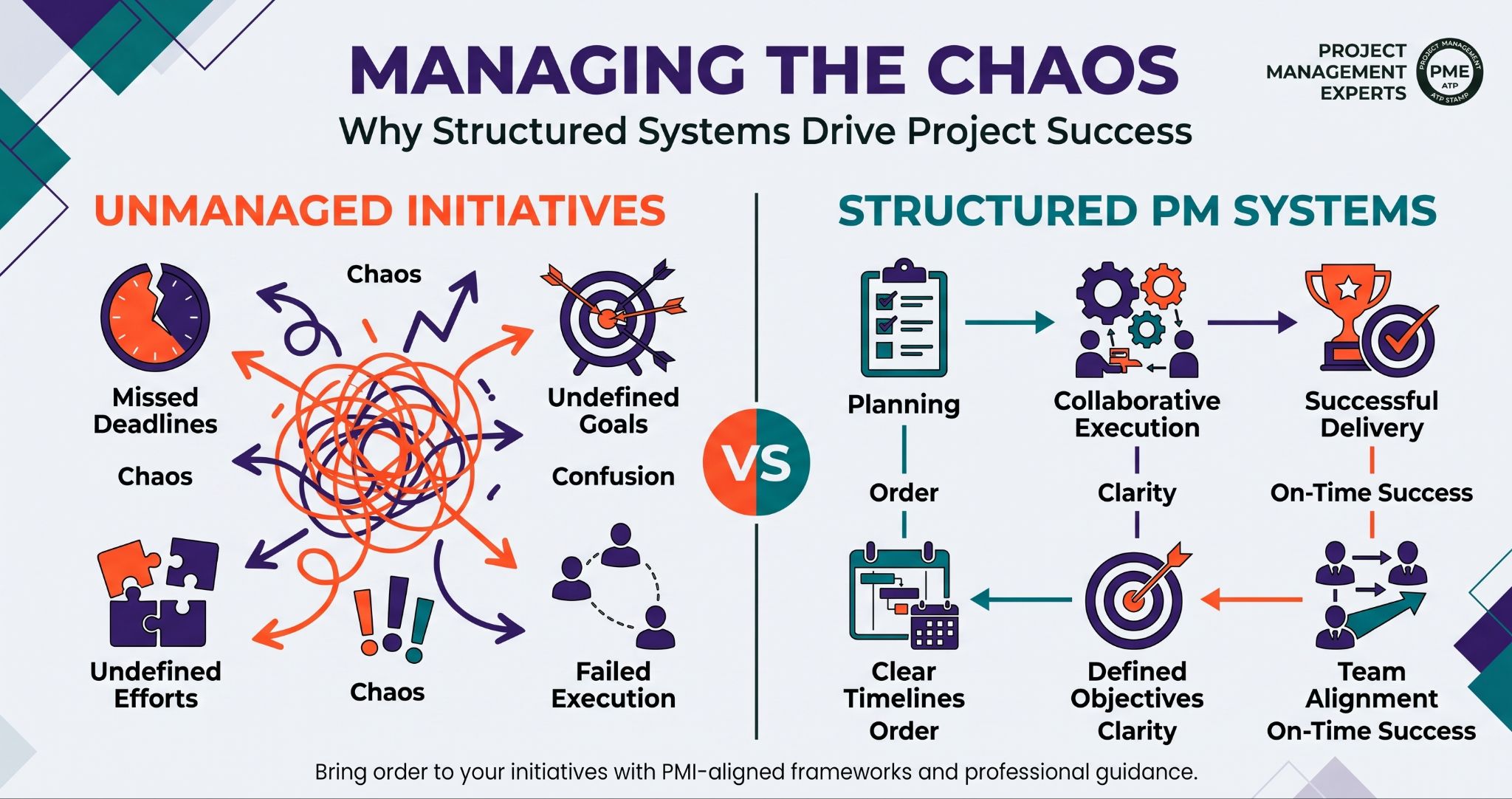
From missed deadlines and confusion to clear timelines, aligned teams, and successful delivery.
Every successful business needs an organized way to get things done. Without formal guidance, initiatives quickly fall victim to budget overruns, missed deadlines, and missed requirements. To really understand what is project management and why it drives business success, you must look beyond basic task tracking. This article breaks down the core concepts so you can lead teams effectively and deliver measurable value.
The History and Evolution of Project Management
Historically, early pioneers adapted factory management to office workflows. In the 1950s organizations like DuPont created the Critical Path Method (CPM) to manage schedules. The Project Management Institute (PMI) formed in 1969 to standardize the field around best practices.
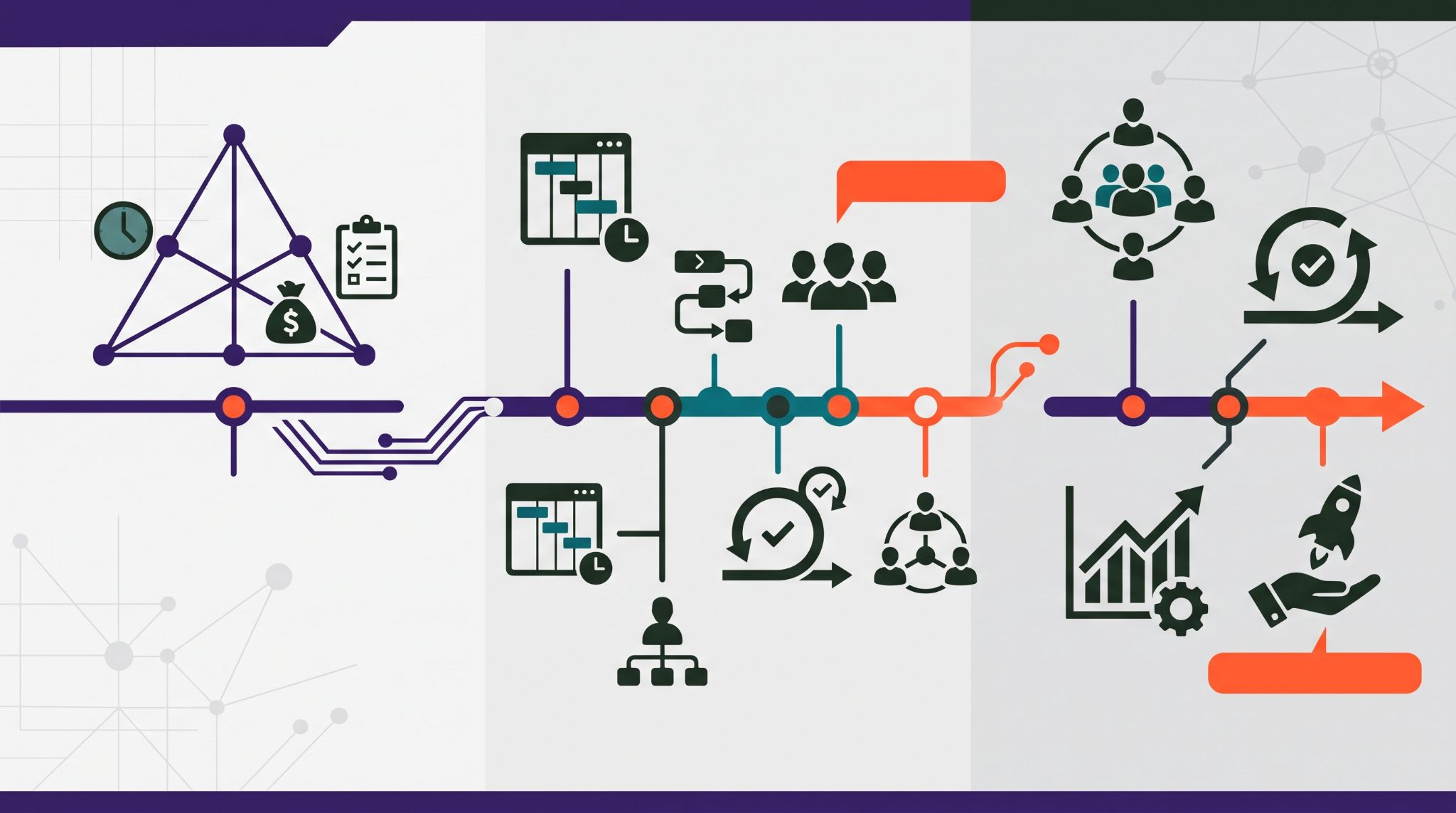
For decades project managers only tracked what is sometimes referred to as the “Iron Triangle” of time, cost and scope. If a project finished on time and on budget the project was considered a success. As business needs have changed, teams could no longer rely solely on timing and budget to determine whether the project is considered complete. Today the field is much broader.
In the past, project management was a checklist. You had to finish step one before starting step two. Now, the discipline has shifted to what are referred to as process groups or focus areas that standardize the delivery cycle and allow maximum flexibility. Today, modern standards like the PMBOK® Guide (8th Edition), focus on areas of work instead. These performance domains include how to lead, the definition of what is needed, the schedule, the finances, who is involved, what resources are used, and any risks.
Instead of forcing teams to follow rigid step‑by‑step paperwork, this shift allows you to choose the best delivery approach for your specific project. The goal is no longer about checking off tasks. It’s about delivering a product that brings measurable business value. Success isn’t about finishing. It’s about making a difference.
What Is Project Management in Simple Terms?
To grasp the full concept, we must look at the discipline in two parts. A project is a unique, temporary effort. You do it to reach specific goals and create real value.
Projects share three defining attributes: a finite lifespan with a defined start and a hard end date, specific deliverables that produce a unique product, service, or outcome, and contextual uniqueness, as even routine projects have unique risks and constraints.
Management is a continuous discipline. You direct, coordinate, and optimize resources. The goal is to keep the business stable and fulfill ongoing goals. When we combine these concepts, we get formal project management. It is the application of skills, tools, and techniques to meet or exceed intended value.
Why Is Project Management Necessary?
To understand the importance of project management, imagine two software teams. Company A has no framework and no dedicated leader, relying entirely on informal conversations during daily standups. Because of this, the project scope continually expands and the budget keeps rising, and the launch gets pushed back by six months. In contrast, company B takes a structured approach. They have a skilled project manager who creates a charter and plans everything carefully. They spot problems early, keep costs under control, and deliver the project on time ensuring someone has their “arms around” the bigger picture.
Similarly, project management concepts can be applied in your daily life to increase your productivity. But when projects involve many departments, teams that work across functions and different stakeholders you need advanced, formal frameworks. These tools help you successfully lead organizational changes while protecting limited budgets.

Who Is a Project Manager and What Do They Do?
The project manager leads the delivery team. They do not just check administrative boxes. They ensure the right work is completed by the right people at the right time.
Simplified Core Responsibilities & The 5 Leadership Dimensions
Every effective project leader fulfills five essential roles:
- Planner: Constructs schedules and cost baselines.
- Leader: Motivates teams and builds psychological safety.
- Communicator: Bridges gaps between technical developers and executives.
- Risk Thinker: Anticipates threats and evaluates their impact.
- Decision-Maker: Evaluates trade-offs to protect project value.
The PMI Talent Triangle & Core Competencies
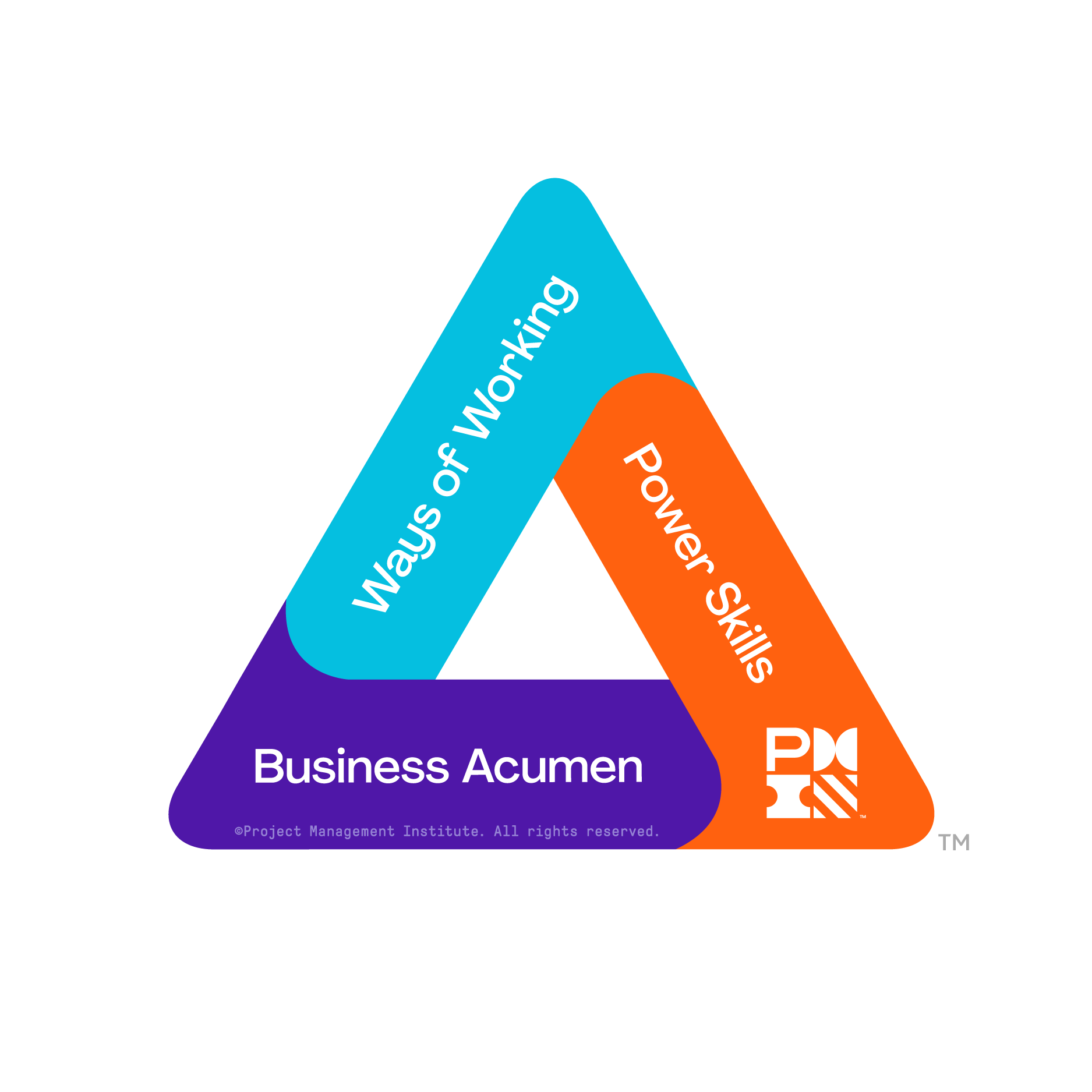
The best leaders master the modern competency model.
- Ways of Working: Mastering delivery frameworks. You must know when and how to apply predictive, adaptive, or hybrid methods.
- Power Skills: Interpersonal leadership. This includes emotional intelligence, active listening, and conflict resolution.
- Business Acumen: Aligning delivery with strategic goals. A modern PM must possess strong financial analysis skills and understand how their project impacts the broader organization.
PMBOK® Guide (8th Edition) also introduces two additional competencies:
- Social Responsibilities: You must maintain strong ethics and strive for the best outcomes for your own development as well as your communities
- Results: You need to focus on value and how to achieve it effectively
Comparing the Top Project Management Frameworks
You must choose the right methodology for the work. Here are the top frameworks used globally today.
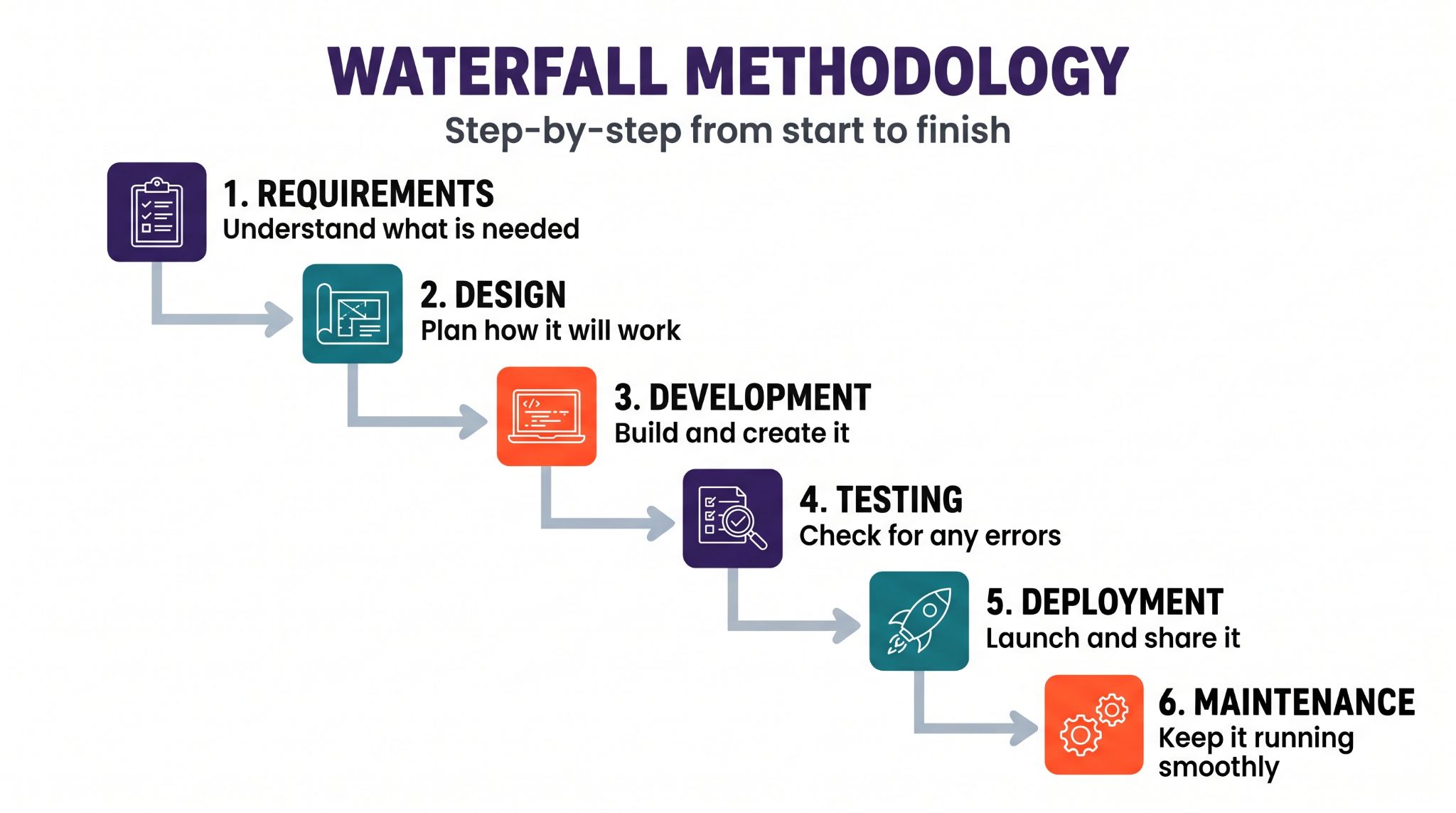
Predictive (Waterfall)
This is a plan-driven development model. You fix the scope, schedule, and cost baselines early. You strictly control any changes. It works perfectly for physical construction or heavily regulated engineering.
Adaptive (Agile & Scrum)
Adaptive delivery focuses on iterative value. Teams use cross-functional collaboration and short Sprints. If you want to master modern delivery, you must understand both agile and waterfall methodologies.

Hybrid Delivery
Hybrid models combine predictive planning with adaptive execution. You might use Waterfall planning for hardware installation, but use Agile sprints for custom software development.
How Is AI Transforming Project Management
Artificial intelligence (AI) is changing the way project management works. It takes project work beyond task tracking and moves it toward achieving real strategic goals. AI does not take over project managers, instead it handles or expedites parts of the job. This frees up project managers to focus on leadership building relationships with stakeholders and solving more complex problems.
There are various tools on the market that help project managers automate and track project milestones, below we have listed four practical ways AI can act as an assistant on your projects:
- Smart Scheduling: AI looks at data from projects to create more accurate timelines. It finds problems in the schedule and suggests changes before delays occur.
- Automated Risk Tracking: AI checks project data to predict risks and issues warnings about possible budget issues. This helps you manage risk better and reduce the concern that something might be missed.
- Stakeholder Engagement: Natural Language Processing (NLP) tools analyze communication records to check how stakeholders feel, and this helps you catch concerns early and adjust your communication.
- Contract Management: AI Software reviews contract terms for you. It can find conflicts and predict when costs might go over budget before the work even starts.
The 3 Levels of AI in Project Management
The PMBOK® Guide (8th Edition) identifies three levels of AI integration:
- Automation: AI handles repetitive administrative tasks. It writes status reports and transcribes meeting notes using standard prompts.
- Assistance: AI creates drafts of things like plans or schedules. It helps sort out scheduling conflicts and calculates risk impacts. But this requires that a human reviews and approves the AI outputs.
- Augmentation: AI does advanced analysis. It acts as an interactive partner by helping project managers weigh trade-offs and works like a brainstorming partner to improve your project portfolio for the return on investment.
3 Major Project Management Myths Busted
Let us clear up some common industry misunderstandings.
Myth 1: “Project management is just administrative paperwork.” Fact: Modern delivery is a strategic capability. It focuses on delivering tangible business value and driving organizational change.
Myth 2: “Agile means no documentation or formal planning.” Fact: Agile is an intentional mindset. It replaces static documentation with disciplined daily coordination and continuous backlog refinement.
Myth 3: “Risk management is only about negative threats.” Fact: Official frameworks define risk as uncertainty. Risk management addresses both negative threats and positive opportunities.
How to Start Your Career in Project Management
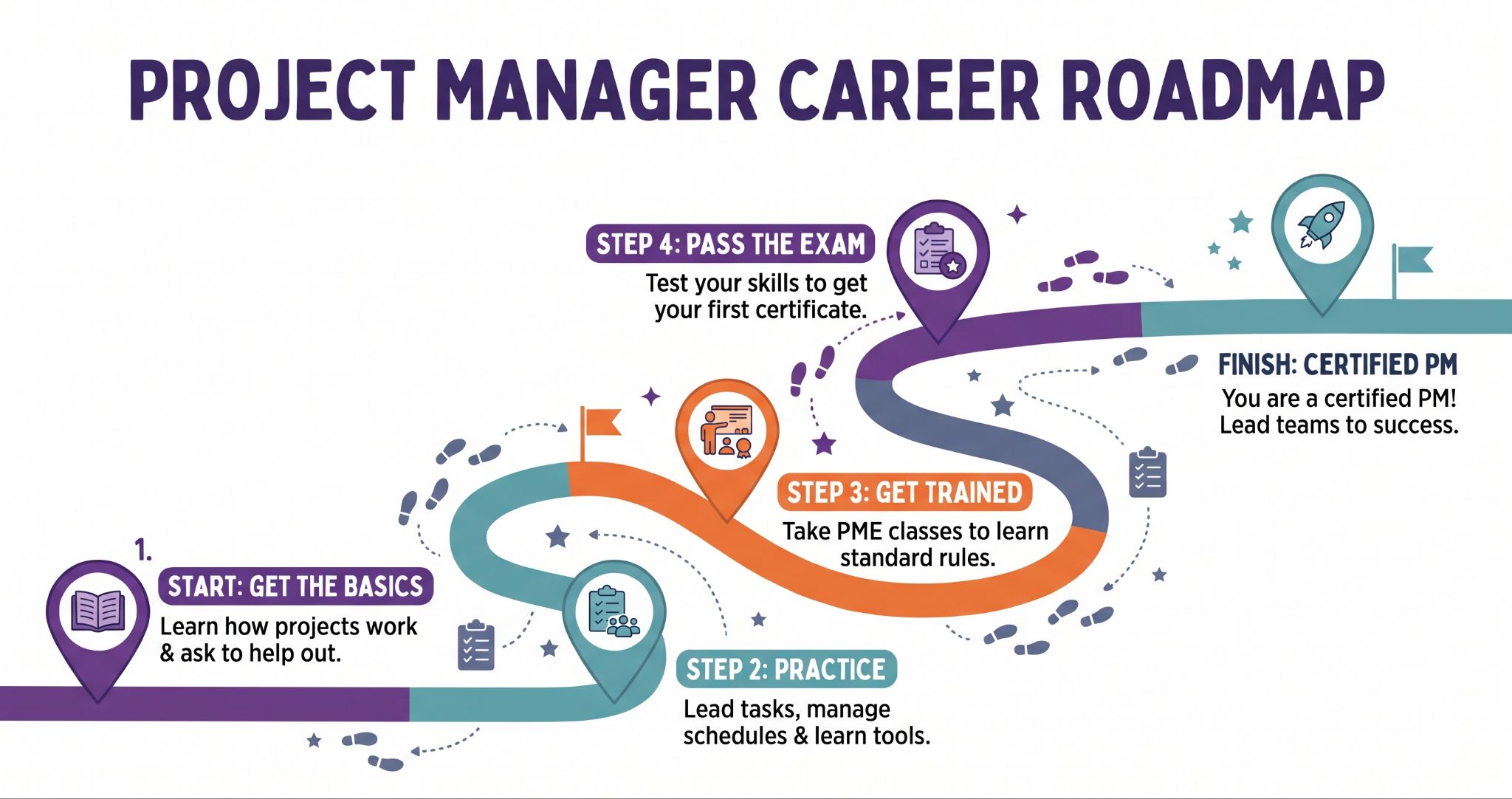
Entering this field does not require an engineering degree. Rather, it requires problem-solving and structured thinking. Follow this roadmap to start your journey:
- Map Your Skills: Audit your transferable experience. If you have organized events or managed product rollouts, you have foundational skills. In fact, you may have non-professional experience that will help translate to success.
- Build Your Foundation: Master standard global terminology (like the PMBOK® Guide) to communicate effectively in enterprise environments.
- Pursue Certification: Formal education elevates your career trajectory and earning potential.
Project Management Experts (PME) is a Premier PMI Authorized Training Partner (ATP #3921). We do not deliver off-the-shelf lectures. We build first-time test confidence and practical capability.
- Beginner Path: Explore our full suite of professional development options on the PME Project Management Courses Page.
- Certification Deep-Dive: Step up to elite industry standards with our intensive PME PMP® Bootcamp.
- Specialized Upskilling: Master automated workflows through our AI in Project Management Certification.